Who Am I if not Exploited?: Music Biopics are Afraid of Musicians
- Ashley Musante

- Mar 6, 2025
- 12 min read
The lie being peddled about artists is that they are meant to be the normal person's mouthpiece for their hopes, fears, dreams, and experiences. What’s closer to the truth is that these people are oftentimes neurotic, anti-social people whose fame is moreso a double-edged sword.
What I find so boring about biopics is that they so often want to showcase the most sanitized, Wikipedia article sounding versions of these stories that are often helmed by people whose messy and unflattering life shades their work more than people actually want to credit it, because God forbid the person you’ve pinned your life upon be anything less than a perfect encapsulation of what you would think, feel, and do in those situations. The movies all want to tell the story of this troubled genius, the artist who wasn’t taken seriously, wrote this song everyone loves, reached astronomical success, was mean to a person here and there but only as a result of outlying issues and never with this person in actuality, and of course we end on a triumphant performance where we leave the artist at their highest and high and never look at their lowest low because why end on that? It’s like I said - Wikipedia page. It’s boring. It cleans up these people in ways that make them so fictional that the public's consciousness of them is more informed by an actor than the actual human person they are portraying. Bohemian Rhapsody. The Dirt. Elvis. What do you gain past a sugar coated ad for these 60 year old songs that you can easily throw on, rave about how good that movie was, and never actually feel like you were sold anything but nostalgia you already had for a product you already owned. What was the point of all that? To make a few people richer, clean up a legacy you already barely gave a shit about, and sell new generations this version of a band that had never truly existed. It’s bullshit.
Now that’s not to say I wish musical biopics didn’t exist, I love them but only if they’re done right. I don’t need to be told a story I can read, I don’t want to be told a story that leaves me with nothing to chew on, and no different view of an artist I’m supposed to care about. I think the issue is that most of these films are made to sell you a parasocial relationship you never had before, to make someone seem so desperate and good that you can’t help but walk away singing their praises, thinking you know them when you’ve never truly been further from their story than you are in that moment. I don’t want to watch a movie that tells me a lie about an artist I like, or never attempts to tell a story in any way that can’t be summed up in a few short lines in an internet article someone was too lazy to read. I want to walk away thinking about this person, their art, how they wish to be interpreted in the context of the world they view, and to have a new perspective to chew on. It would make sense, right, for an artist's story to be creative, to make you think while at the same time entertaining you instead of pandering to some middle ground crowd, right? Wrong! Apparently to most, it’s weird if an artist is weird, if an artist is dare I say creative in their interpretation of their life.
I think three films do a very similar thing to one another while still standing apart from pretty much every other boring biopic on the scene. The movies that never really pandered to these fictional crowds of people and instead stuck true to the niche, weird, side-ways world of rock and roll in a way you’d expect any great provocateur to, while killing the thing that makes those boring ones so lackluster. That, or something I would like to call: How Rocketman, Better Man, and A Complete Unknown sever your parasocial understanding of artists.





Starting with the most boring of the three, A Complete Unknown places the viewer into 1960s Greenwich Village as a young Bob Dylan first blows into town. The story follows him until the 1965 Newport Folk Festival where he went electric for the first time and rocked the world in a way that had never been seen. It’s a charming little film about Dylan that somehow speaks to a tumultuous political climate and changing world while saying next to nothing at the same time. It never really goes anywhere, it doesn’t say anything, on the surface at least. Watching the movie hoping for an understanding of Bob Dylan will give you two things: an appreciation for his music and a very disappointing revelation that he’s a major asshole. If you look behind the curtain a bit more, you see a more skeletal structure




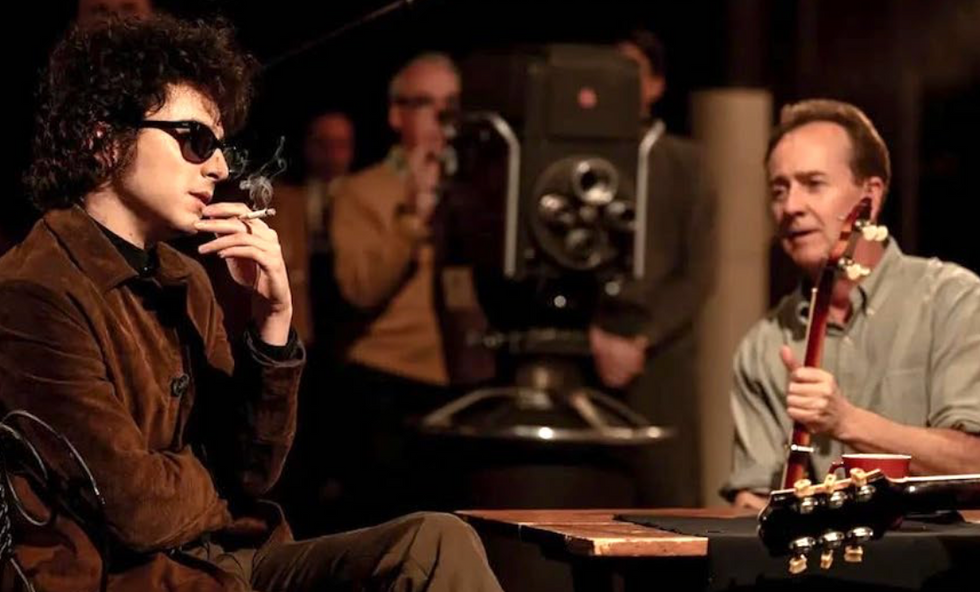
about how all people have ever done is view Bob Dylan in a hope to understand him, never really in earnest to see what he was about. The thing about Dylan is there's nothing to understand, he’s a great songwriter and he’s a man who thrives on the security that his secrecy brings him. The film understands this but doesn’t tell the audience. It showcases Dylan’s claustrophobic surroundings and each action he makes through two characters' lenses. Each time we focus on his face he’s empty. He stands there, no emotion, no thoughts, no reactions - he’s nothing without reaction. He is, by all accounts, a character for the public and nothing more. You watch the film and you see this character, Bob Dylan, and each of his decisions and how they seem to affect everyone more than him. Reuniting with Joan Baez on stage at the festival is viewed as positive by Joan, yet when you pan to his long-suffering girlfriend Slyvie you see how much that hurts her. Sitting to listen to a new band is viewed as positive for the musicians on stage, but the audience is quick to be upset when Dylan does nothing more than sit quietly to watch the show. What he does is not showcased as something done in a vacuum, James Mangold isn’t telling the story of an artist's rise and ending it on his triumphant performance showing all the “villains” of his story falling under the weight of this phenomenal artist and his earth-shattering performance. There’s no villains to prove wrong, there’s no triumphant, there’s no winning. There’s a man standing on stage, being viewed by a million different people, being thought of as different by each set of eyes, being the messiah and Judas in the same set of actions. You’re not spoonfed thoughts to have on Dylan nor told anything about him really. You see this divide in how some people have interpreted the movie as it is now, how people can see Bob Dylan as only a moody, asshole upheld for talents they deem good enough, or those who argue the movie didn’t say enough about Bob Dylan. It creates a discourse like the man himself does, it divides, it answers nothing, it creates an air of mystery in its wake. It’s by the numbers, but it gives the viewer a perspective to gnaw on if they chose to take it.
Rocketman examines Elton John in very similar framing how Taxi Driver examines Travis Bickle: his actions speak louder than his words. The film coasts through an unreliable narrator being a downright terrible and at times despicable person. You watch Rocketman and you see Elton John in a light that most people would never shade themselves in, all of his worst moments are on full display, showcasing a version of Elton John that most other films would try to hide beneath glitz and glam. You see this as the character of Elton sits in rehab, telling everyone his life story, talking about how loving his father was before we cut to his childhood and see that every word he said was a lie. This alone introduces you to this unsavory aspect of Elton, how he is willing to lie to any audience in means of making himself look better for any reason, even if he’s sitting in a rehab facility full of people who don’t need a song and dance about how he’s secretly perfect and he’s just going through a tough time. It gives you the character of Elton John, the loud showman who always has a quip and is seemingly larger than life in each and every room he enters, and undercuts those moments with a version of him so often left in the wings, the one with the anger issues that he takes out on undeserving people and the man who was willing to bury everything for the sake of not disappointing others. There are scenes in the movie where you are urged to disagree with Elton and his actions, see him as wrong, and understand his issues are a direct result of his own doing by certain points. When he yells at Bernie Taupin before going on stage, telling him to just “write the fucking lyrics”, it’s a shock: you aren’t supposed to agree with Elton, and you don’t. It’s wrong, it’s horrible to see him yell at his best friend who has done nothing but support him till this moment, but it can be taken as a reality. Elton tells the members of rebab him and Bernie has never fought, but we see him pick fights with Bernie the whole film, it leaves you in a limbo. It's serving you a version of Elton that isn’t easy to accept or someone you can walk away feeling like he is a saint. It works on this destruction of parasocial tendencies so well because of this, it doesn’t pander to this idea of


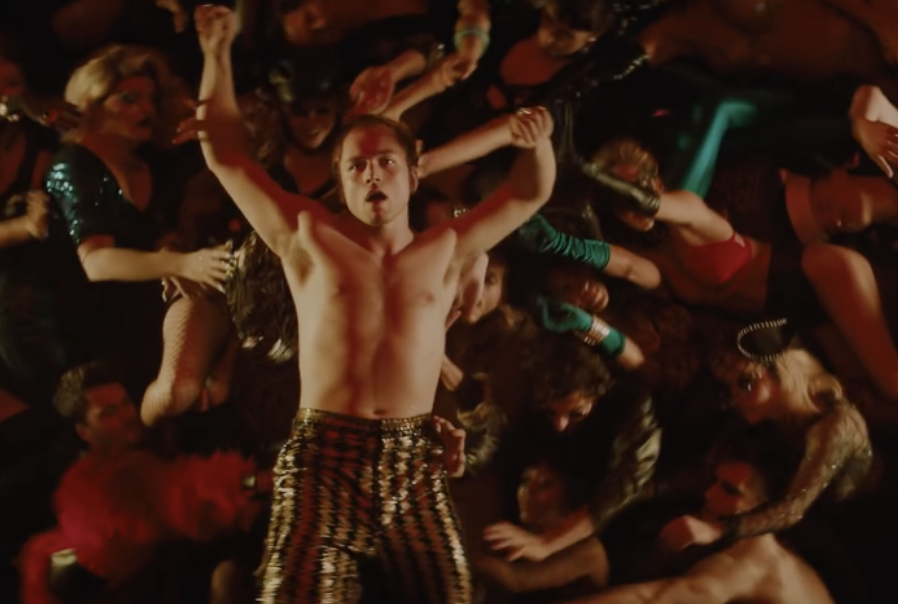

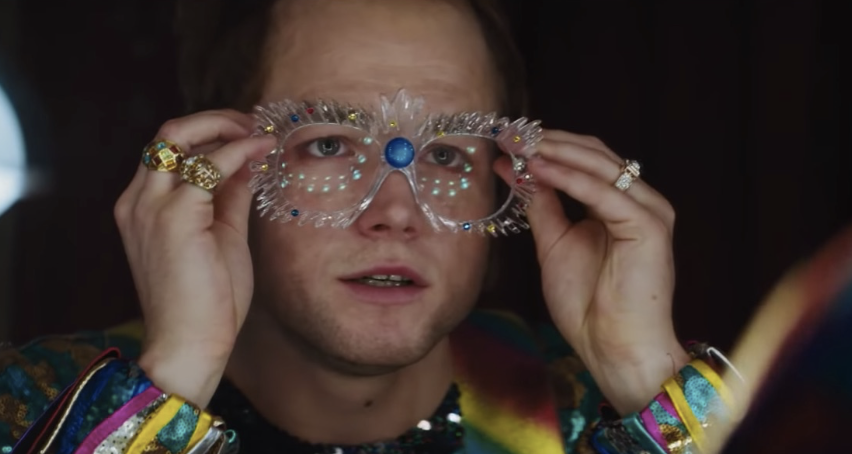


Elton and instead goes directly for these horrible aspects of his life in a manner that leaves little to the imagination of how he really was during these moments. The movie is a fantasy, mind you, one where we see him attempt suicide and then start to sing to his child-self, and then turn into a rocket - but it’s those moments that help it speak to the audience best about it’s story. You can’t walk away from Rocketman with a sanitized or complete understanding of Elton John, but you walk away with pieces of his story that paint him as a very real, very flawed person that you don’t know and never will. Many people scoffed at the musical identity at the center of the film, wishing it was more straightforward, but that would’ve done much more damage than good. If we were watching a straight forward film, there would be no room for people to accept some of these things are dramatized, made-up, or reinterpreted to fit better into the narrative structure that a film needs. How no he didn’t sing Crocodile Rock at the Troubadour because the song didn’t exist but you wouldn’t know Bad Side of the Moon, so it was fudged for a narrative reason, how no he did not actually walk away from a show at MSG to go to rehab but it fits a film better, and how no he was still in the throws of addiction when he wrote I’m Still Standing. If those things weren’t created, the movie would be boring, the real things would most likely be skipped over in fear audiences would find them slow, uninteresting, or too upsetting. Those stories are available from Elton in his memoir in an uncomfortable amount of detail on how they panned out, but they aren’t needed in a movie that isn’t a definitive story on Elton John. But you can accept that these aren’t true, as he turns into a rocket, it would be weird if that was the only thing that wasn’t real that happened. You get a gritty, uncomfortable look at addiction that is able to be summed up in visuals and not through exposition that will alleviate blame from your main character, it uses its medium of film to push the story to insane ends because it takes the liberties that you can’t use when telling a story in a way that reads like a article, giving you a version of Elton that may harm the idolized version of your mind but open you to the idea of a real person behind the glasses and glitter.
I’d say the one that worked the best at disarming the tendency people have to want to understand everything abotut their public figures was the most recent example of the three, Better Man. The movie is a narrative about Robbie Williams life that tackles ideas of self worth, addiction, and the harms of fame while the titular character is actually a CGI monkey. It’s genuinely not as distracting as it sounds. It does what both A Complete Unknown and Rocketman do, merging them together to make a story so outlandish that you know that it’s dramatized at portions while also examining the idea of a performer with the idea of how others see them, the allusion of a dancing chimp shouldn’t be lost on anyone here. Director Michael Gracey discussed the idea behind making Robbie a monkey as it being a way to make people actually feel sympathy, as it’s so hard for people to drum up sympathy for actual people due to the more normalized showcases of drug use in media and the growing lack of empathy people have come to harbor. Gracey explained that more people would have sympathy for an animal doing cocaine as it’s uncomfortable to view, it allows the audience to actually feel how they should when faced with images of drug abuse and overworked people. In what Rocketman tackled, a fantastical story of a flawed person is done here, showcasing the life and times of a man thrust into the spotlight at a young age and overworked for most of youth, someone whose behavior was seen as normal for a pop

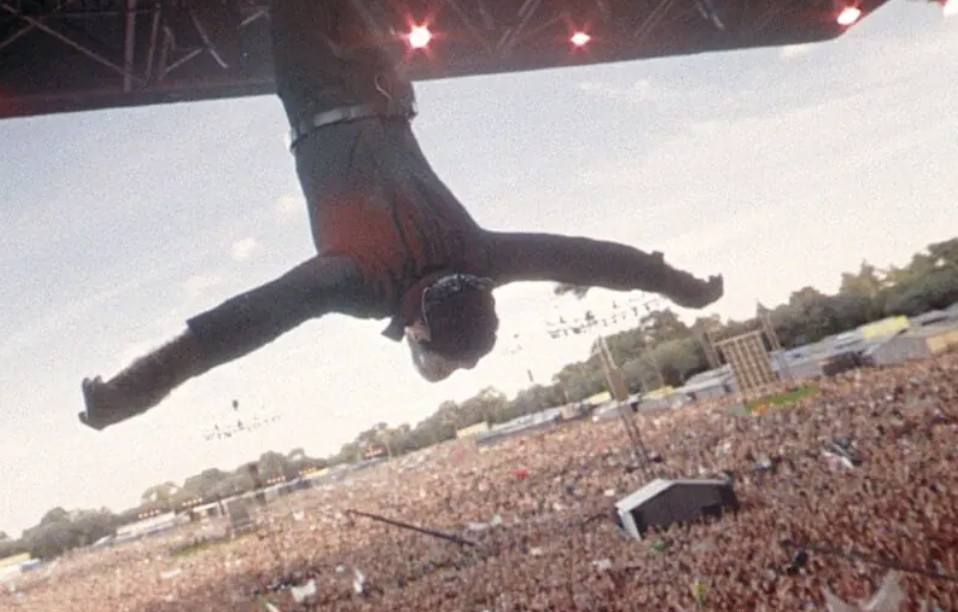

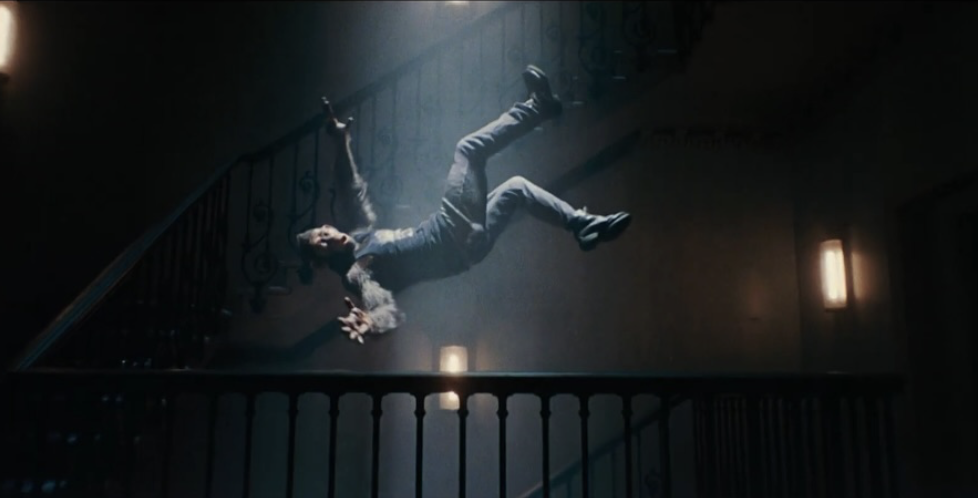


star and therefore not checked. It makes Robbie very unlikeable - blaming his girlfriend for an abortion, being unable to think of anything but fame and adoration even when life is about more, constantly comparing himself to every other performer despite the fact he has no need to be compared. It’s the typical story of the rockstar in many ways, the man who thinks of himself highly while showcasing that they don’t think they deserve what they have from their actions, the story that often times gets omitted from silver screen adaptions of musicians. Better Man doesn’t shy away from the ambitious and cutthroat nature of creative types, how someone who knows they’re good enough to be thought of seriously will not stop in their pursuit of validation even if it nearly kills them in the process. There’s no attempt to make Robbie less of anything he is: a narcissistic, condescending, rich asshole who's gotten everything he’s ever wanted. It doesn’t make him a character for the audience to easily pin themselves upon, someone easy to sympathize with, or understand. It takes its liberties, but you understand you’re getting a somewhat skewed view of this life with the placement of the protagonist being a monkey. It is able to communicate a lot through that one piece, how he views himself as less evolved than those around him, how no one seems to notice he’s different yet all he sees when he looks at himself is an animal who is completely on the outskirts of the rest of humanity, that he stands alone. It allows discussions to be had about the idea we have for our performers, how we expect them to perform like circus animals for our enjoyment but don’t care that they aren’t made for that life, even if they enjoy it. It uses the form of the monkey - and how no one mentions it - as a showcase of how no one in his world sees him as different, but we the audience know he’s not like everybody else. It takes such a unique approach to a film genre that has proven time and time again it is not focused on actually appreciating the artist they are actively profiting off of, telling the audience point blank that they don’t view artists as people, and that they can’t bare to feel bad for an artist they can’t view in an overtly positive lens all the time. Better Man takes an arrogant narrator and has him open with telling everyone just how arrogant he is, never letting him enter your view as a person you have to sympathize with. In fact, you probably wouldn’t if he wasn’t portrayed as an animal. A commentary on fame, an artists view of self, and a question as to what an audience truly expects of their creatives.
I guess that loops us back around to the issue we started with: why must so many films pander to making musicians likeable as opposed to telling their stories in an artistic way? Artists are in and of themselves creative people whose stories can’t be told by conventional means, they don’t even interpret their feelings into conventional means, so why should their stories be told with no more creativity than a simple summary of their life? Art is meant to make you think, or good art is at least, and it’s so great when a movie about an artist follows the idea of art: thinking of things through a new and unique lens. It’s almost a cautionary tale about what is to be accepted by the eccentric people behind what you love, how they can only innovate so far before people complain they aren’t palatable enough. People complaining they don’t know anything new about Bob Dylan after A Complete Unknown, even if that’s what makes it such a faithful adaptation of his life and the mystery that follows him. The main critique of Rocketman was its status as a fantasy musical, even if it’s a movie about one of the most eccentric and outlandish performers of all time. So many people complained of how strange the idea behind Better Man was, even if the whole point of the movie could be summed up easily within the main creative decision. To be informative is not synomous with being boring, and that is the cardnial sin of the musical biopic. Unfortunately, when there is an attempt to make an artist a real person, people will take that chance to complain of it. God forbid your artists are artists.


Comments